 Genius Asian
 Kissing Dove Ice Carving on Carnival Breeze Cruise Ship
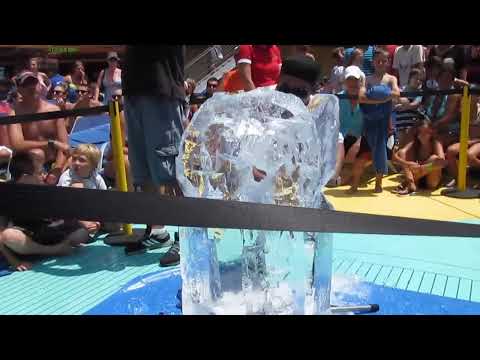
Kissing Dove Ice Carving on Carnival Breeze Cruise Ship
One of the most unexpectedly captivating events we experienced on the Carnival Breeze was a live ice carving demonstration on the pool deck. A single expert ice carver took a 300-pound block of solid ice and, over the course of roughly 45 minutes, transformed it into a delicate sculpture of two kissing doves. The entire process — from the first rough cuts with a chainsaw to the final detail work with chisels — was mesmerizing to watch. Here is everything that happened and why you should make sure you catch this event on your next Carnival cruise.
Key Takeaways
- Carnival Breeze features live ice carving demonstrations as part of its on-board entertainment lineup, typically held on the pool deck.
- A 300-pound block of ice is sculpted into a finished piece in approximately 45 minutes, right in front of a live audience.
- The “Kissing Dove” design is one of several sculptures the carvers create during a cruise — each event features a different finished piece.
- Audience guessing is part of the fun. The emcee invites passengers to guess what the sculpture will be as it takes shape, with guesses ranging wildly from bears to penguins to water bottles.
- The finished sculpture is displayed on deck for passengers to photograph and admire after the demonstration.
Setting the Scene
The ice carving event takes place on one of the open deck areas, usually near the pool. A roped-off workspace is set up with the 300-pound block of ice sitting on a raised platform. The ship’s entertainment team emcees the event, warming up the crowd and establishing some ground rules — most importantly, stay behind the barriers. When a chainsaw meets ice at high speed, sharp shards fly in every direction, and you definitely want to keep your distance during the cutting phase.
The atmosphere is festive and casual. Passengers gather in a semicircle, drinks in hand, many still in their swimsuits from the pool. Kids push toward the front for the best view. The emcee builds anticipation, introduces the ice carver, and then the chainsaw roars to life.
The Carving Process
Watching 300 pounds of ice become a work of art is genuinely fascinating, even if you have no particular interest in sculpture. The process follows a clear progression that is easy to appreciate.
Phase 1: Rough Shaping
The carver starts with a chainsaw, and this is the most dramatic phase. Large chunks of ice fall away as the basic silhouette takes shape. At this stage, the block starts to look vaguely like something, but it is far from clear what the final product will be. The crowd begins shouting guesses. During our demonstration, early guesses included “a bear,” “a penguin,” and “a sled.” Someone confidently announced it was going to be “a water bottle,” which got a big laugh.
The chainsaw work is loud and physical. Ice chips spray across the deck, catching the light and creating a brief sparkle before they hit the ground and melt. The carver works quickly and confidently, clearly following a mental blueprint that the rest of us cannot yet see.
Phase 2: Medium Detail
The carver switches to smaller power tools — an angle grinder and smaller saws — to refine the shape. This is where the sculpture starts to become recognizable. During our demonstration, the crowd could begin to make out what appeared to be a heart shape in the center of the piece, and two forms emerging on either side. “A heart with a bow on top!” someone shouted. “A heart that’s on fire!” guessed another passenger.
The emcee walks around the crowd with a microphone, collecting guesses and keeping the energy high. Getting passengers to commit to a guess before the reveal is part of the entertainment.
Phase 3: Fine Detail
The final phase involves hand chisels, picks, and specialized tools for creating texture and delicate features. The carver smooths surfaces, carves feather details, and shapes the beaks and tails of the doves. A heat tool (essentially a flat iron) is used to polish certain surfaces of the ice, giving them a glass-like transparency.
This is the most impressive phase to watch. The precision required to create delicate features in a material that is actively melting under deck lights and Caribbean sun (or in our case, Mediterranean warmth) is remarkable. The carver has to work fast enough to finish before the piece deteriorates, but carefully enough not to snap off any thin features.
The Big Reveal
When the carver steps back and the emcee calls for the final guesses, the sculpture is unmistakably a pair of doves, their beaks touching in a kiss, perched on a heart-shaped base. The crowd erupts in cheers and applause. The carver takes a bow, and passengers surge forward for photos.
The finished kissing dove sculpture stood about two feet tall, with translucent wings that caught the light beautifully. The level of detail — individual feather lines, curved beaks, the smooth heart base — was genuinely impressive for something carved from a single block of ice in under an hour.
Why This Event Works So Well
On a cruise ship packed with entertainment options — theaters, comedy shows, live music, poolside games — the ice carving demonstration stands out because it is real and unscripted in a way that most shipboard entertainment is not. The carver is performing genuine artistry with real tools on a real piece of ice. There are no second takes, no safety nets. If a wing snaps off, it is gone. That element of risk and skill holds the crowd’s attention in a way that a rehearsed stage show sometimes cannot.
It is also one of the few entertainment events on the ship that appeals equally to every age group. Kids are fascinated by the chainsaw and the flying ice. Adults appreciate the artistry and the social guessing game. And everyone likes the dramatic reveal at the end.
Tips for Enjoying the Ice Carving Event
- Arrive early for a good spot. The event draws a big crowd, and the best viewing positions near the front fill up quickly.
- Stand upwind if possible. Ice chips and mist spray toward the audience during the chainsaw phase. It is refreshing on a hot day, but you might want to protect your camera.
- Bring your camera or phone. The finished sculpture makes a great photo, especially if you can catch it with the ocean or sunset in the background.
- Check the daily schedule. The ice carving is not held every day. It is typically listed in the Carnival Fun Times daily newsletter delivered to your stateroom.
- Come back after dinner. The finished sculpture is usually displayed on deck for several hours. Evening lighting can make the ice glow and produce some dramatic photos.
Other Entertainment on the Carnival Breeze
The ice carving was just one highlight of a packed entertainment schedule on the Carnival Breeze. The ship also features full-scale theater productions, comedy shows, live bands in multiple lounges, poolside competitions, and a talent show where passengers take the stage. The crew dance performances during dinner were another unexpected delight — waitstaff suddenly launching into choreographed routines on the dining tables is something you do not see at your local restaurant.
Making the Most of Your Carnival Cruise
If the ice carving demonstration is any indication, some of the best experiences on a Carnival cruise are the ones you do not plan for. Wandering the deck and stumbling onto a live carving, a spontaneous crew performance, or a spectacular sunset from the hot tub on the aft deck — these unplanned moments often become the most memorable stories you bring home.
For more about our experience on the Carnival Breeze, check out our overview of the ship and its amenities. And if you are planning your own Mediterranean cruise, our tips on preparing for European travel cover the practical details you will want to sort out before you board.